Real - Sports
- 4.9
- Rating
- 500.00K
- Installs
- Free
- Price

 Analysis by App-foxy
I installed Real - Sports expecting a simple place to talk about matches, make predictions, and see how my opinions compare with other fans. That is exactly the lane it chooses. This is a free sports app from Real Vault, aimed at people who enjoy the social side of sport as much as watching the action itself. Rather than trying to replace a live-score service, a news reader, or a full fantasy platform, it focuses on conversation, prediction, and friendly competition.
That distinction matters. I would not open it when I need the fastest possible score update or a deep statistical database. I would open it when I want to make a call before an event, see whether other supporters agree, and return later to check how my judgment held up. In my experience, that narrower purpose gives the app a clearer identity than many sports products that try to do everything at once.
What using Real - Sports feels like
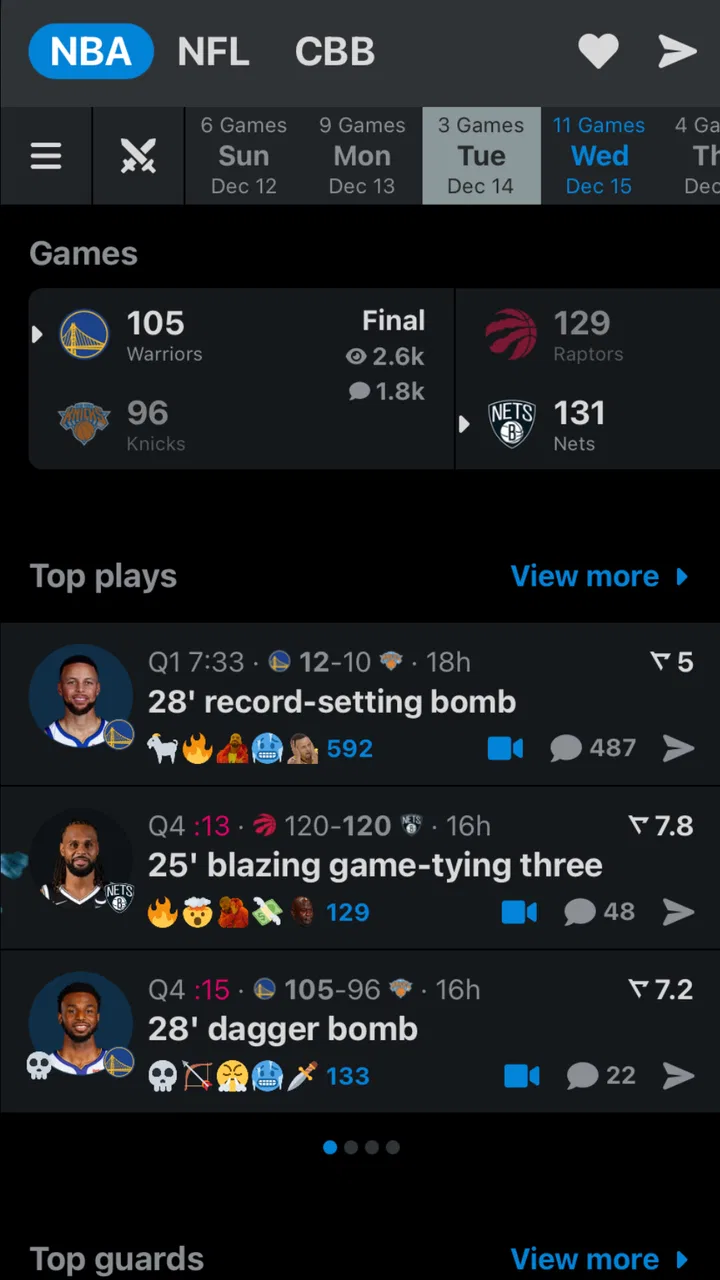
The first useful way to understand the app is as a social prediction space. Its store summary describes discussing, predicting, and competing, and those three activities explain the experience better than a long feature list would. The discussion side gives the app a community feel, the prediction side creates a reason to participate, and the competitive element adds continuity for users who like tracking their decisions over time.
You May Also Like

 Blood Strike: 2.5 Anniversary
Blood Strike’s Loadouts Turn Every Drop Into a Tactical Gamble
A close look at Blood Strike’s custom loadouts: how fast access to signature weapons reshapes its battle royale rhythm, rewards preparation, and narrows the gap between fights.

 Pandora - Music & Podcasts
Pandora’s Music Is Easy to Start, but Harder to Recover
Pandora’s strength is its low-effort path from a seed to a station. Its weak spot is how much confidence it asks you to place in connection, setup, and quiet recovery.

 8 Ball Pool
 Is Built on Rivalries, Rematches, and Routine
A close look at the rivalries, rematches, shared routines, and unanswered safety questions that turn a quick pool match into a persistent mobile community.

 Samsung Music
’s Quiet Strength Is Playing What You Already Own
Its reach comes less from spectacle than from dependable access to a personal library. That simplicity is both the app’s strongest retention engine and its ceiling.

 AccuWeather: Weather Radar
AccuWeather Review: A Quick, Clear Forecast for Everyday Decisions
For everyday plans, the best forecast is the one you can understand quickly. AccuWeather makes rain timing, radar, and local conditions easy to act on, with a few trade-offs.

 Hill Climb Racing
Why Hill Climb Racing Still Turns Crashes Into One More Run
A tiny car, a bumpy hill and one more upgrade: Hill Climb Racing keeps resurfacing because its simple chaos makes every near-miss feel personal.
More From Our News Desk



I found that combination more appealing for casual participation than for serious sports analysis. You do not need to prepare a spreadsheet or follow every tactical detail to join in. A quick opinion before a game can be enough to make the event more engaging. At the same time, someone who enjoys comparing their instincts with a wider group can use the prediction activity as a lightweight personal record.
The app is listed in the sports category and is suitable for Everyone, which matches its accessible tone. It is not presented as a betting product, and I would treat it as a fan discussion and prediction tool rather than a way to risk money. That makes it easier to recommend for a shared sports conversation, including a quick exchange with friends during a commute or before a weekend fixture.
One realistic use case is a group of friends checking the app before a match. Each person makes a prediction, reads the surrounding discussion, and then returns afterward to see who was right. The value is not just the result; it is the small ritual of committing to an opinion instead of changing it after the outcome is known. For fans who enjoy that kind of interaction, the app can make otherwise ordinary fixtures feel more personal.
A focused alternative to score and news apps
Compared with a standard live-score app, Real - Sports feels less efficient if your only goal is information. Dedicated score services usually win on speed, competition coverage, lineups, alerts, and detailed match data. They are built for checking facts. This app is better suited to expressing a view and seeing how that view fits into a community.
It also differs from a conventional sports news app. News services are useful when you want reporting, interviews, transfer coverage, or analysis from professional writers. Here, the attraction is participation. You are not simply consuming an article; you are adding your own prediction or reaction. That can feel more rewarding, but it also means the quality of the experience depends more heavily on the activity and judgment of other users.
Fantasy sports platforms are another nearby alternative, but they ask for a different kind of commitment. Fantasy play often involves managing a roster, balancing budgets, and following player performance across a longer season. Real - Sports is more immediate. Its appeal is the individual prediction and the conversation around it, not the management of a virtual team. I would choose this app for quick opinions and social comparison, and a fantasy platform when I wanted a deeper season-long project.
Where trust enters the experience
Because this app is built around discussion and competition, I pay attention to more than the sports content. Any community product asks users to decide how comfortable they are participating, what they want to share, and how much attention they are willing to give the social side. I look for visible choices rather than assuming that a friendly interface automatically means a frictionless or private experience.
The practical approach is to review the account and privacy choices presented during setup and inside the app before becoming highly active. I would avoid sharing personal details in public conversations unless they are genuinely needed. Sports predictions do not require a biography, and keeping posts focused on the event makes the experience easier to manage later.
I also recommend checking whether the app lets you control notifications and account visibility in a way that suits your routine. A prediction app can become distracting if every discussion feels urgent. My preferred setup is to keep only the alerts that help me return for a result or meaningful interaction, rather than allowing the social layer to interrupt the entire day.
That is not a criticism unique to Real - Sports; it is a sensible habit for any community-based app. The important point is that the best experience comes from making deliberate choices instead of accepting every prompt automatically. The strongest trust signal is not a promise on the screen, but the clarity of the choices you can actually review and change.
How I would handle account and data choices
I would begin with the smallest amount of information needed to use the service. If the app offers optional profile fields, I would leave anything unnecessary blank until I understood why it improves the experience. A sports prediction profile can remain useful without revealing personal information that has nothing to do with sport.
Before posting, I would also remember that a public prediction can become part of my visible activity. That matters if I use the same username elsewhere or if I prefer to keep my interests separate from other online identities. A short comment about a match may seem harmless, but repeated posts can reveal favorite teams, routines, and the times when I tend to be active.
When an app includes social interaction, I prefer to know how to edit or remove my own contributions and how to deal with unwanted contact. I would look for account-management controls, reporting options, and notification settings before I needed them. If those controls are easy to find, participation feels more comfortable. If they are buried or unclear, I would use the social features more cautiously.
The same principle applies to device permissions. I would grant only permissions that are clearly connected to a feature I intend to use, and I would revisit them if I stopped using that feature. I would not treat a request as mandatory simply because it appears during onboarding. Android users can review permissions through system settings, while iPhone users can use the relevant privacy controls on their device. The exact choices shown can depend on the operating system and the way the app is used, so I would judge each request at the moment it appears.
Moments that deserve extra care
The most data-sensitive moment is usually not making a prediction; it is joining the social layer around it. A public comment, visible username, profile image, or activity history can reveal more than a single match opinion. I would keep my posts specific to the sport, avoid contact details, and think twice before connecting the account to other services if that option appears.
Another moment is when the app encourages more frequent participation. Competition can be motivating, but it can also push users toward checking rankings or discussions more often than they intended. I found it helpful to decide in advance whether I wanted a quick match-by-match habit or a more committed routine. That small boundary keeps the app enjoyable instead of turning every result into something I feel obliged to monitor.
I would also separate prediction confidence from prediction identity. It is fine to be wrong, and a good community should leave room for changing one’s mind without embarrassment. If the competitive side makes mistakes feel too public, I would reduce my posting or use the app mainly to read. The product is at its best when competition adds fun rather than pressure.
For parents or younger users, the Everyone rating makes the app broadly approachable, but that rating should not replace normal supervision of social interaction. The relevant question is not only whether the subject is sport; it is also how a particular community behaves. I would encourage younger users to avoid personal disclosures, understand who can see their activity, and speak up if a discussion becomes uncomfortable.
Small habits that improve the experience
My first tip is to make a prediction before reading too much discussion. If I read a strong argument first, it can quietly replace my own assessment. Recording an initial view before browsing the conversation makes the later comparison more useful: I can see whether I changed my mind because of a convincing point or simply followed the loudest opinion.
My second tip is to treat discussion as context, not proof. A popular prediction may reflect enthusiasm for a team rather than a careful assessment of form. I would use comments to discover angles I had missed, then make my own decision. This is one of the app’s more interesting trade-offs: the community creates energy, but the same energy can produce a crowd effect.
My third tip is to review results periodically instead of judging myself after every event. A single wrong call says very little. Looking back across a group of predictions can show whether I consistently overvalue home advantage, favorite teams, or recent results. Even without turning the app into a serious analytical tool, this habit makes participation more thoughtful.
A fourth useful habit is to choose conversations selectively. I would follow the sports or events that genuinely interest me rather than trying to keep up with everything. That reduces noise and makes the comments more relevant. It also helps with privacy because a narrower public activity trail reveals less about my overall routine than constant participation across every available topic.
Performance, version, and everyday practicality
Real - Sports is currently at version 6.0 and supports Android 7.0 or later. That gives it a relatively broad reach for Android users, including people who keep an older device instead of upgrading frequently. I would still install it through the official app marketplace and keep the operating system reasonably current, especially for an app that involves accounts and user interaction.
The app is free, which removes the biggest barrier to trying it. Free access is particularly useful here because the value is personal: some people will enjoy prediction communities immediately, while others will discover that they prefer private group chats or traditional sports coverage. You can test the basic rhythm without first committing money.
Its audience size also suggests that it has moved beyond being an obscure experiment. The app has passed half a million installs, with an average rating of 4.5 from roughly three thousand seven hundred ratings and six hundred fifty-one written reviews. I see that as encouraging evidence of interest, not a guarantee that every discussion will suit every user. Community quality can vary by sport, event, timing, and the people currently active.
The developer is Real Vault, and the product was released on March 15, 2021. That history gives the app a meaningful period of availability rather than making it feel brand new. Still, I would pay attention to how clearly updates explain changes, how easy account controls are to locate, and whether the app remains transparent about the choices it asks users to make.
Who should use it, and who should skip it
I would recommend Real - Sports to fans who enjoy making predictions without the complexity of fantasy management. It is a good fit for someone who wants a small pre-match ritual, likes comparing opinions, and does not need professional-grade statistics. It can also work well for friends who want a shared activity around sport without creating a full league or maintaining a complicated scoring system.
I would be more cautious recommending it to someone who wants authoritative reporting, instant alerts, or detailed historical analysis. A dedicated score app will likely be faster for live information, while a sports news service will offer stronger editorial context. If your main goal is to manage players, optimize a roster, or compete over a long season, fantasy software is probably the better choice.
I would also skip it if social competition makes sports less enjoyable for you. The app’s identity depends on participation, and that can feel like unnecessary noise if you prefer watching quietly. Likewise, users who are uncomfortable with public activity should inspect the available account and visibility controls before posting, and should be willing to keep their involvement limited if those choices do not match their preferences.
My cautious verdict
Real - Sports succeeds because it does not need to pretend to be every kind of sports app. It gives fans a place to discuss events, make predictions, and add a competitive layer to ordinary viewing. I enjoyed it most when I treated it as a companion to a match rather than as a replacement for scores, news, or expert analysis.
Its free price and Everyone rating make trying it straightforward, while the broad Android support makes it accessible to many users. The main responsibility sits with the user: keep personal information out of public posts, review permissions and account controls, manage notifications, and remember that community opinion is not the same as reliable sporting evidence.
My final recommendation is therefore conditional but positive. If you want a lightweight social sports habit and enjoy testing your instincts, this app is worth exploring. If you need precision, depth, or a private experience with no competitive pressure, choose a specialized alternative instead. Real - Sports is most valuable when you use it to make watching more interactive, while keeping your own boundaries firmly in charge.
FAQs for Real - Sports
01What features does Real - Sports offer to enhance my sports experience?
Real - Sports provides a comprehensive platform for sports enthusiasts, offering live scores, in-depth statistics, and real-time updates across various sports. Additionally, the app features personalized news feeds, match highlights, and interactive forums where fans can discuss and share opinions. It also includes customizable notifications to keep you updated on your favorite teams and events.
02Is Real - Sports free to use, or are there any subscription fees?
Real - Sports is free to download and offers a range of free features. However, there is a premium subscription option that unlocks additional benefits such as ad-free browsing, exclusive content, and advanced analytics tools. The premium version is available on a monthly or yearly basis, providing enhanced engagement for dedicated users.
03How user-friendly is the Real - Sports app for beginners?
The app is designed with user-friendliness in mind. With a clean, intuitive interface, navigation is straightforward, making it easy for beginners to find their way around. Tutorials and a comprehensive help section are available to assist new users in maximizing the app's features. The design ensures that both casual fans and seasoned enthusiasts can enjoy the app seamlessly.
04Does Real - Sports cover international sports and leagues?
Yes, Real - Sports offers extensive coverage of international sports and leagues. From major events like the FIFA World Cup and the Olympics to regional tournaments, the app includes a wide array of sports such as football, basketball, cricket, and more. Users can follow their preferred leagues and receive tailored content based on their interests.
05What are the system requirements to run Real - Sports on Android and iOS?
Real - Sports is compatible with both Android and iOS devices. For Android users, the app requires Android 5.0 (Lollipop) or higher, while iOS users need version 11.0 or later. The app is optimized for both smartphones and tablets, ensuring a smooth user experience across various device types. Regular updates are provided to enhance compatibility and performance.
Pros
- User-friendly interface for easy navigation.
- Real-time updates on scores and news.
- Customizable alerts for favorite teams.
- Wide range of sports covered globally.
- Detailed statistics and player profiles.
Cons
- Contains ads that can be intrusive.
- Requires internet for most features.
- Limited offline content availability.
- Occasional delays in live updates.
- Premium features locked behind paywall.

Real - Sports
Gallery